"Perhaps the most impressive of all the cookbook blogs are the three devoted to the 2004 edition of Gourmet magazine's "The Gourmet Cookbook" -- all 5¼ pounds and 1,300-odd recipes of it. Befitting this culinary Everest, all three writers are overachievers in their professional lives."

--Lee Gomes, The Wall Street Journal, May 28, 2008
"I should have told you before how much I've been enjoying reading your thoughts. You seem like such a great cook."

--Ruth Reichl, Editor-in-Chief of Gourmet Magazine, June 8 2008, comment on "Chocolate Velvet Ice Cream".

Showing posts with label vegetables. Show all posts

Friday, November 25, 2011

Roast Pumpkin with Cheese "Fondue"


Happy Thanksgiving, people! I hope your day was filled with excellent food, lively conversations and lots of hugs from people you love. Mine was!

I've had my eye on this whole roast pumpkin for a while now--it's one of Ruth Reichl's favorite party dishes. What an extravagance! Shredded Gruyere and Emmantal, layered with toasted baguette rounds and soaked in nutmeg-scented heavy cream and chicken stock, baked inside a scooped-out pumpkin for an hour and a half until it's all melted together.

It sounds glorious, and well, it is. My only problem making this pumpkin dish was actually procuring the pumpkin--I went from store to store--even tried a landscaper--only to be told that the hurricane had devastated the New England pumpkin crop and even before Halloween markets were importing them from other parts of the country.

Oh no! It never occurred to me that I wouldn't be able to find a pumpkin. I spent a few days resigned to finding a less glorious vegetable dish to bring and wondering what I was going to do with all that Gruyere and Emmental in the fridge.

But then! I went to the annual Santa Parade party at my sister's house:


And my eagle-eyed mom said she had noticed some pumpkins at a farm stand on the way into Bradford! I guess the hurricane took a detour around the Haverhill area? On the way back home we pulled over to the unmanned but pumpkin-bedecked farmstand and I took a look. Most of the pumpkins were actually rotten, or on the way to it, but there was one that was sound, and just the right size. So I loaded it into the car and drove all around the barn and house looking for somebody to give some money to--farmstand people, whoever you are, I'll give you some money next season!

Pumpkin score! Except...there were two teeny little places where the pumpkin was a little soft. That's nice language for starting to go rotten. One was on the bottom and one was on the side sort of close to the top.

Yes, I did wake up Thanksgiving morning mulling this problem over. And let me tell you how thankful I am that of all the potential problems in the world one can have that can wake you up, mine was wondering about how to maintain the integrity of a pumpkin wall so cream and cheese wouldn't leak out. Problems like this are a blessing!

Here's how I solved it. When I scooped out the pumpkin innards, I took out all of the rotten pumpkin flesh that I could from those two spots, but kept the outer skin intact. Then I crumpled up some parchment paper and stuffed it into the gaps. I thought about foil, but didn't want the metal to conduct extra heat to those areas.

I also didn't want the paper plugs to come loose and float around--or worse, to get scooped up into somebody's plate, so I pinned a small square of parchment paper over each plug with toothpicks, and since I didn't see anybody choking on a toothpick last night I can assume they stayed in place. Yay for no choking!

The only thing that was kind of a pain in the ass about this dish is that it TOTALLY hogs the oven space. And it takes a long time. With all those side dishes that needed to be heated, we ended up firing up the grill and relocating the pumpkin for the last half hour or so (oh, and let's not forget the small propane oven we tried next door that is uh leaking gas or something? And set off an alarm? I guess we should also be thankful the house didn't blow up.)

So make this dish if a) you have two or more ovens b) you have alternative cooking options c) this is the only thing you're eating. Oh, and d) you're not on a diet. This is not on any diet known to man, unless you're on the see-food diet. (Haha, get it? I see food, I eat it? I think we're all on that diet this time of year.)


Thanks to the Christian Science Monitor and Haverhill Events for pics!

Wednesday, May 4, 2011

Roasted Asparagus with Shallots and Sesame Seeds


It's spring! That means it really truly is asparagus season, which is flooding the markets from points south. And while it's not popping out of the ground quite yet here in New England, there's no reason you shouldn't start enjoying the bounty now.

Roasted Asparagus with Shallots and Sesame Seeds is one of three asparagus recipes in Vegetable chapter of The Gourmet Cookbook (the yellow one), and it's a perfectly respectable way to prepare this vegetable. If you understand all the words in the recipe title, you've got the gist--asparagus is roasted in the oven and tossed with its friends minced shallots and (lightly toasted) sesame seeds. A little more roasting, a little squeeze of lemon juice and you've got yourself a side dish.

Happy Spring!


Monday, April 25, 2011

Artichokes with Garlic Pimiento Vinaigrette


As I have (probably) mentioned elsewhere on this blog when the subject of artichokes comes up, I was raised eating artichokes one way, and one way only: steamed, with a ramekin on the side of melted butter liberally salted and lemoned.

Eating artichokes this way is one of the purest pleasures on earth--a slow scraping of each individual leaf, then freeing the heart from its prickly mantle and devouring it in quarters in the last dredges of milky, lemony butter.

It's inconceivable to me that anybody would want to eat artichokes any other way, but apparently they do. Here's one of those other ways--Artichokes with Garlic Pimiento Vinaigrette.

This recipe has you steam artichokes in the usual way, but only after you trim them and extricate the choke with a melon baller. This is, my lambs, easier said than done--depending on how farm-fresh your artichoke is, you might have a struggle getting those inner leaves pried open enough to scrape out the choke. I did and was none too happy about it. BUT it's always good to have an opportunity to trot out your most creative swear words.

While they're steaming you'll make the vinaigrette--a pleasant garlic/oil/vinegar brightened up with chopped pimientos and parsley. It makes for pretty plate! I couldn't bring myself to serve the artichokes cold (for me cold food requires 80 degree days) so mine were warm-ish, and although my dinner companions ate these up (and so did I) frankly I like them better served hot with lemon butter. Sorry.

Exciting late-breaking Artichoke News: while exchanging tales of Easter dinners in the break room at work, one of my co-workers mentioned his mother's stuffed artichoke recipe--bready and garlicky and buttery. That sounds like something I can get behind--Mike, please ask your mom for the recipe!


Sunday, April 10, 2011

Winter Vegetables with Horseradish Dill Butter


I don't know about you, but when the seasons are on the cusp of change, I have moments of culinary regret about the seasonal dishes I could have made, but didn't. Nectarine Mousse Cake, Mango-Spacho, Pecan Pumpkin Pie, Gingerbread Snowflakes--I'm looking at you.

So it was in that spirit that I decided to cook up some Winter Vegetables with Horseradish Dill Butter before the winter was completely gone. It might officially be spring here in New England but it still feels cold to me. Spring will be here in my opinion when I can leave the house without gloves.

I wasn't too far into making this vegetable dish when I had some serious deja vu. Yes, it all seemed so very familiar, the horseradish, the butter, the steamed veggies, as if I had just cooked this very meal. But of course, I hadn't--had I?

I paged back through my blog posts, and silly me--there it was: Midwest Boiled Dinner from Gourmet Today, featuring--you guessed it--steamed vegetables with brown-butter horseradish sauce. Different cookbook, same idea and done better--the veggies in the Gourmet Today recipe are steamed with staggered cooking times so they are done perfectly and the butter is browned which gives greater depth of flavor.

It's a better recipe. I can't in good conscience recommend the one from The Gourmet Cookbook over it, though Gourmet Today leaves out the chopped dill. So if you too want to celebrate the end of winter by indulging in some yummy steamed root vegetables, go with Midwest Boiled Dinner and leave out the smoked pork (or not, up to you) It's not a bad way to say GOODBYE WINTER (don't go away mad, just go away!)

Sunday, March 21, 2010

9 Winter Recipes


The quandary of cook-through food blogging: what is more important, cooking the recipes, or blogging about them? When I have to choose one or the other due to time constraints, cooking always wins. Not the best scenario for you, dear reader, but luckily I don't have any scruples about combining many dishes into one post.

So here for your reading pleasure is a catch-up post on what's been happening in the Palladino kitchen over the last few months.


When I was a kid, if you asked me if I hated any foods I would have promptly said "hot dogs and lima beans". But now I see that it's all in the preparation (although I'm sorry to say the only thing you can do to improve hot dogs is drown out their taste with the spiciest chili imaginable).

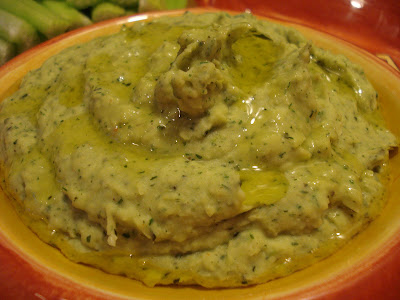
After you've cooked limas with an onion and some garlic, you whiz them up in a food processor with herbs, spices, lemon juice and olive oil. If you're squeamish about spending the bucks for all those fresh herbs in the market (because this calls for fresh cilantro, parsley, dill AND mint) wait for summer when they're abundant and free if you know the right gardeners.

This recipe is a win. I could eat it every day.


Of the many bean-based soups in the book, this one has got to be the fastest. A few cans of black-eyed peas, a slab of ham, diced, a little chicken broth and some collards and hey presto--you've got soup. Very satisfying and if you sweat your onions instead of sauteing them you've got a good spring dieting soup too. Please note that's not my photo--thanks to iamglutenfree.blogspot.com for the swipe (at least I think that's what the script says).


I'm always a little nervous about using bitter greens in salad but I guess they have their place in the universe. One place they occupy nicely is as a counterpoint to a rich entree, like the Shrimp in Coconut Milk, seen here all snuggled up on the same plate.

This salad was pretty good though it called for vast and amazing amounts of chicory to be trimmed away (the dark green outer leaves--good for soups, says the book). If your chicory is like my chicory you can't wash it enough--it must be grown primarily in sand so take heed and wash wash wash. The best way to do it I think is to put the leaves in a big pot or bowl of cold water and let the sand sink to the bottom.

Would I make this salad again? Maybe!


Again, not my photo, and not fully accurate--imagine cubes of creamy white tofu mixed in. Thanks to Recipes for a Postmodern Planet for the swipe.

This recipe was beyond fantastic because of the spices. If you like Indian food in general, you'll swoon over this. It calls for Garam Masala which you can make but also now (thanks to McCormick's ever-adventuresome spice offerings) buy pre-mixed in the supermarket. Vegetarians, this one's for you.


Cauliflower is not the first vegetable I turn to in the produce section when I'm grabbing stuff for dinner. It's not even the second one, and actually not the third one. In fact it might be somewhere down the list with broccoli rabe. Why? It's a perfectly innocuous vegetable but it seems sort of boring and also it's white which makes it seem somehow less healthy than green and orange things which of course is nonsense.

If you too feel uninspired by cauliflower look no further than this dish to create a little excitement with flavors that really pop and an ingredient that actually literally pops--mustard seeds, when heated in a skillet, will pop right out of the pan. So be careful. And enjoy this one--it's a nice way to mix up your weekday veggie repertoire.


Trying to eat less meat? This is a quick week-day supper that will give you veggies, protein and fiber all in one fell swoop and it's also super fast and great for lunch the next day. Sometimes that's all you really need so if this is one of those times, go for it.


Sweet Potato Pie with Bourbon Cream

Aw, just when you thought I was getting all healthy on you with all these veggies and beans--no way, brothers and sisters. My dedication to butterfat remains as constant as ever. I am also pretty close to finishing the Pie chapter so I took the opportunity at our last book group (Serena by Ron Rash in case you're wondering) to make this pie.

What's different about this pie? Frankly I was amazed at how many of my fellow book groupies had never had sweet potato pie so that's different--might be a new experience for your diners. Two, the sweets potatoes are roasted, not boiled. Pretty subtle. Other than that it's just a good old sweet potato pie made with bourbon, and topped with heavy cream flavored with more bourbon. Can you really go wrong here? I think not.


Lemon Pound Cake

With this cake done, I can now count the remaining cake recipes on one hand. Five left, people!!

I made this for my writer's group and it was pretty easy to put together (if you don't mind zesting a gazillion lemons)--my only problem with it was that it just wouldn't finish baking in the middle. See that crack up there? I baked this pound cake for well over an hour and that one spot just wouldn't bake. Weird and vexing but it was still delicious (if slightly, er, moist in that center part). The book suggests serving with strawberries and I did.

Hmm, maybe I'll make that Passover Sponge Cake for my writer's group tonight.....


This is one of the recipes I thought I would never get around to making. For one thing it calls for a special mold and for another it seems fantastically complicated. But, somewhere around Valentine's Day I found myself having a dinner party and since we inherited some heart-shaped molds from our neighbor Marjorie


it seemed like the obvious dessert choice.

Make no mistake--this dessert is kind of a pain. Anything that asks you to force a solid through a fine sieve is going to be irritating. Ditto for lining the little molds--individually--with damp cheesecloth. But what a pay-off! A sweet little dessert that will melt the hearts of your friends and loved ones, and the portion size is just right for a tasty but not too filling treat. Anybody local who wants to try this I'm happy to lend you these molds.

So that's the wrap-up, folks! Thanks for being patient, and I'll see you back here soon.


*****************************************************************************


Paleolithic recipes in this post: Cauliflower with Ginger and Mustard Seeds


Thursday, December 31, 2009

Roasted Spiced Sweet Potatoes


Gourmet Magazine is no longer published, but it is certainly not forgotten. A great example of this is the new blog "Gourmet Unbound", which seeks to keep the spirit of the magazine alive by soliciting monthly posts from cooks around the world who are going through the archives month-by-month.

My friend and fellow Gourmet blogger Adam over at Gourmet, all the way tipped us off on this (Teena and me)--should be easy for those of us blogging through the Gourmet Cookbook, no? And according to the submission guidelines, all you do is an advanced search at Epicurious with your month of choice--a quick browse and I found many recipes I had already done and many more that were in the book waiting for my attention.

A side note! I found two recipes that were apparently published in a January version of the magazine that just astonished me--I would have bet all kinds of money that they would be featured in the dog days of summer. This is why I don't go to Vegas--I suck at betting. The recipes are: Cold Buttermilk and Shrimp Soup (January 1991) and Quince, Apple and Almond Jalousie (January 1998).

It's beyond me why anybody would feature a cold soup in January (unless your readership is primarily in the tropics?) and quince, at least up here, is a seasonal summer fruit. So go figure. And by the way, that soup is awesome. Make it next time it's hot.

On to the featured recipe--Roasted Spiced Sweet Potatoes (January 2002)! I made these to go with the Cider-Braised Pork Shoulder with Caramelized Onions I talked about in my last post. If you've ever oven-roasted potatoes before this will all seem very familiar--what's unusual and most tasty about this side dish is the spice blend: coriander and fennel seeds, dried oregano and red pepper flakes ground in a spice grinder and mixed with salt. It's kind of weird but it's really good. And an excellent complement to the main course! If you've got the mid-winter blahs in the cooking dept oh and maybe you're trying to shed some of those holiday pounds, consider this one--sweet potatoes are one of those vegetables that are supposed to be super good for you.

Happy New Year!


Sunday, September 20, 2009

Pesto, Colcannon, and Next-Gen Blogging!


Next-Gen Blogging? Quoi?

Yes. What that means is that my son, O'Malley, has decided to pick up the pen and dive into the world of cook-through blogging.

This may not come as a surprise to you (thinking, probably, genetics + environment), but it certainly does come as a surprise to me since I remember all too well about a decade + of my child refusing to eat practically everything that I cooked. I can't tell you how maddening it is to plan, shop and prepare a meal, only to have it rejected out of hand because it contains SQUASH. (missed that memo, apparently!) Or don't I know that he hates STEW?

Yes, it's a wonder I'm not bald. From pulling my hair out.

So about half a year ago it was with no small amount of amazement that I went to pick O'Malley up at his dad's so we could go to karate class...and found him making spring rolls. And then not too long after he informed me he was cooking dinner for his girlfriend's family...and he made pho. And then he called me on the phone to ask my advice about baking hamenatashen.

Do you notice all of these cooking adventures are taking place in places other than my house? Yes, I did too, and I protested vigorously (but MOM, he said, we already have a gourmet chef at your house!). But that night he invited his girlfriend over for dinner and in less than three hours produced not only a beautiful Chinese soup but dessert as well (Cherries in Snow)--recipes he just pulled off Epicurious and executed without thinking twice.

The next weekend (at my insistence) he cooked again, and this time from The Gourmet Cookbook, and tackled Pot au Feu.


It was right about in here somewhere that he started talking about wanting to do his own cook-through blog, and the book he wanted to do was one that he's already been cooking out of--Sundays at Moosewood.


This book has a lot of meaning for me because I consider it to be the book that really started me on the road to having the potential for being a chef.

Why?

Well, I was a vegetarian for 12 years, and had really explored what was on the shelves at the time for vegetarian cooking--which was pretty much locked up by Mollie Katzen and the Moosewood restaurant folks unless you wanted to access older tomes and go for the brown rice-stuffed zucchini boats and dense hockey puck-whole wheat bread of seventies vegetarian cooking.

So, The Moosewood Cookbook. And shortly thereafter, The Enchanted Broccoli Forest. They were my companions and teachers, and when Sundays at Moosewood came out I cooked through that book just as ardently...and in the process learned about vegetarian cooking from every corner of the globe. It's because of that book that I know what injera is--and dashi--and I still think that the best trifle recipe EVER can be found in the British Isles section. I discovered rice noodles and ghee, and it's also because of that book that I confidently strode into the kitchen of a restaurant in Bar Harbor and told the chef (who was seeking help) that I would be just the person to assist him in his quest to put Japanese food on the table.

Now keep in mind all of this cooking went on before O'Malley was even born, and by the time he was a toddler experimenting with eating food I was on to other books--Fields of Green, for example, learning how amazing seared mushrooms are in a grilled cheese sandwich. And finally I gave the book away to a friend who wanted to cook vegetarian--it's filled with my notes--with nary a pang.

And yet, here it is again. O'Malley's dad bought a new copy at some point, and O'Malley has found it.

This will be fun for me. I can't wait for when he gets to the trifle. And you'll be able to find his blog here. Won't you stop by and welcome him to the ranks?

***************************************************************************

Pesto! Colcannon! Italy and Ireland, since we're talking about round-the-world cooking today!

Actually, I asked O'Malley to make the pesto because I wanted to harvest the basil on the deck--and he jumped on it. This is a basic pesto recipe from the Sauces and Salsas section of the book, and it's nothing new--your standard basil, pine nuts, parm, garlic and olive oil blend. I thought it seemed a little loose but it will certainly be a luscious topping for the fish I'll be getting this week from the fish share.

The colcannon happened because I was searching for a cold-weather way to use cabbage--seems too chilly now for coleslaw. Boiled dinner seemed too BIG--stuffed cabbage rolls seemed too FUSSY--and colcannon seemed just right.

What is colcannon, you might ask? Basically, it's mashed potatoes + cabbage. And it's super easy--just boil you some peeled russets, and in another pot simmer 4 cups of chopped cabbage with a cup of milk and a stick (yes, a stick!) of butter. When they're both done, put them together and mash in a happy marriage.

My big surprise (and vexation) with this dish was discovering anew that even the tiniest cabbage contains far more cabbage than one would think. Seriously--the cabbage I used was about the size of a large grapefruit--let's say a pomelo. Four cups there, right? Even quartered and cored, it looks like it's gonna be four cups.

Start chopping, and baby, it's like clowns coming out of a clown car. My tiny cabbage gave me TEN CUPS of chopped cabbage. Forget the loaves and the fishes--I'll bet Jesus was making coleslaw.

Why is this vexatious? Because I'm trying to get RID of this stuff! And now I have more! Now what?!?


Saturday, August 1, 2009

Twice-Baked Potatoes with Basil and Sour Cream


Like many of you, I am spending much of my cooking week looking at far more vegetables than normal, thanks to a CSA share. I must confess that sometimes I just take the simplest route possible and go for a little saute in olive oil, but last night I was determined to MAKE something, many things actually, and to have at least one of those things be a NEW Gourmet recipe that I could write about here.


Actually, it should be thrice-baked potatoes! And before I dive into this recipe I'm going to wonder out loud, once again, why most of the potato recipes in this book call for russets. If you don't know the difference between baking and boiling potatoes, it's all about the starch content--boiling potatoes have less, baking potatoes have more. This makes a difference in many things, from texture to whether or not they hold together in soup, to how they crisp up.

So you would think that a twice-baked potato recipe would call for a baking potato, right? Wrong. For whatever reason, this one calls for Yukon Gold--I think mostly because of their relatively smaller size.

Well, I had a bag full of dirt-covered Yukon Golds to cook up, so Twice-Baked Yukon Golds it was, starch (or lack thereof) be damned.

The first step is easy. Bake your potatoes! Prick them with a fork, and bake in a 400 oven for an hour. No problem.

The next one--scoop out the potato flesh (once they're cool enough to handle), mash with butter, add milk and salt and pepper and some chopped fresh basil. Roger!

The next one (and this is an unusual step and one that makes this recipe extra yummy), brush the potato shells with butter, and put them back in your 400 oven for 20 minutes to get crispy. Got it.

Then, put your filling in the crispy shells, and bake for an additional 10 minutes to get everybody all up to the same temperature.

Garnish with sour cream (you were wondering when the sour cream comes in, weren't you?) and additional chopped basil.

Hey people--if you're baking these with those little bitty Yukon Golds I'm just telling you in advance that it is almost impossible not to pop them, whole, into your mouth. Before they get to the table. So make a lot. Fair warning!

Thursday, June 18, 2009

Creamed Chayote with Chives

Unless you've spent a significant amount of time living or traveling in southerly climes, you might be hard-pressed to describe a chayote. I was. In fact, I had never heard of chayote, and I've lived in Georgia, Texas and North Carolina (albeit many decades ago).

If you are likewise clueless about chayote, here's what Wikipedia has to say about them:

The chayote (Sechium edule), also known as sayote, tayota, choko, chocho, chow-chow, christophene, mirliton, and vegetable pear, is an edible plant that belongs to the gourd family Cucurbitaceae along with melons, cucumbers and squash.
The plant has large leaves that form a canopy over the fruit. The vine is grown on the ground or more commonly on trellises.
Costa Rica is a major exporter of Chayotes worldwide. Costa Rican chayotes can be purchased in the European Union, the United States and other places in the world. Chayote is a very important ingredient in the Central American diet. In Mexico, Veracruz state is the most important Chayote growing area, and is also a major exporter of this product, mainly to the United States.


I found my chayote in Market Basket, my source for all things ethnic that can't be found in the "international" aisle in the local markets. It looks kind of like a dark green pear.


I was surprised by the big seed in the middle!


Oh, the recipe! It's actually pretty simple--Creamed Chayote with Chives calls for chayote, vegetable oil, cream, salt, and chives. I chopped my chayote up...


and then apparently stopped taking pictures, because that's all I got. So imagine that the chayote are now sauteing in a pan, and that now I'm adding cream, and that now I'm adding chopped chives and salt.

And now imagine that I'm tasting this dish, thinking huh--this is kind of a bland treatment for such a mild vegetable!

Yup, chayote tastes almost exactly like summer squash or zucchini. If the thought of zucchini cooked in cream turns you on, I say go for it, but methinks there's gotta be a better way. If you happen to have a bumper crop of chayote, turn to the many, many zucchini recipes out there and sub it in. One of my well-traveled friends says she has only ever eaten it stuffed, and frankly I think it would make a better stuffing vehicle than long, skinny, easily tippable zucchini!

Here are some more fun facts about chayote, that I've learned just this morning (thank you, Wikipedia!):

1. The whole darn plant is edible--seeds, roots, leaves, everything. How often do you see that?

2. In Taiwan, they're planted for their shoots, which are called "dragon whiskers".

3. In Australia, there's a persistent rumor that McDonald's uses chayote, not apples, in their so-called "apple pie", which has led to an aggressive marketing campaign on McDonald's part stating that they use REAL APPLES! REALLY!

4. And I'm just going to quote this one: "Due to its purported cell-regenerative properties, it is believed as a contemporary legend that this fruit caused the mummification of people from the Colombian town of San Bernardo who extensively consumed it. The very well preserved skin and flesh can be seen in the mummies today.[citation needed]" Please note that "citation needed" is Wikipedia's mark, not mine!

And, like any seed, fruit or vegetable hailing from the ancients (the Aztecs apparently ate a lot of this stuff), chayote is rumored to have medicinal qualities--ie, a tea made from the leaves is supposed to dissolve kidney stones. Maybe it does--who knows? If I had kidney stones you can bet I would try it since passing a kidney stone is apparently very very very painful.

So my conclusion here is yay for chayote, a new vegetable for me, but in my opinion this particular recipe doesn't do it justice.

Saturday, March 21, 2009

Tomato Gratin with Parmesan Crumbs & Salt and Pepper Grissini

One of my small side jobs is cooking and delivering lunch and dinner for an elderly gent every other day. This has been an interesting job (it's temporary, alas--) because he's just one person, and my challenge to myself has been to take an ingredient (carrots, tomatoes, potatoes etc.) and make it as many different ways as possible so he doesn't feel like he's getting the same meal over and over. The other challenge is to find recipes that don't take extraordinary amounts of time, since I get paid a flat rate for each meal.

The Gourmet Cookbook has been incredibly valuable in this department. For each vegetable you can possibly name, they offer at least one if not more possibilities (and if you're cooking potatoes, you're in luck--a whopping 17 recipes for them, with 6 mashed potato variations to boot.)

This is how I came to Tomato Gratin with Parmesan Crumbs. The only cooking you have to do is saute a little garlic, then mix it with bread crumbs, grated parm, salt and pepper. Sprinkle that over sliced tomatoes and basil, throw in a 500 oven for 15 minutes, and you've got a nice little side dish that goes especially well with fish.


This beautiful photo is not mine, I got it from Eating Well.

**********************************************************************************************

The Breads and Crackers chapter is filled with some interesting stuff--talk about a huge subject that must have been hard to narrow down. It's one of the smaller chapters, though, with only a couple of recipes for each subcategory but they go the distance--biscuits, sweetbreads, scones, yeasted breads, rolls, doughnuts, crackers, breadsticks.

I decided to try Salt and Pepper Grissini for a small luncheon at work, and one of the diners used to live in the South--where, she had once told me, the women would vie over who could make the longest, thinnest, crispiest breadsticks.

I think these could be contenders. They are VERY easy to make (just whisk together flours, baking powder, baking soda, sugar and salt in a bowl and add buttermilk and melted butter)--the only fiddly part is rolling little pieces into the long, thin dough logs. But take heart, if you were a playdough champion in pre-school this will be relative easy for you.


It was at this point where I wondered where the pepper came in, since it wasn't in the dough, then I went back and read more carefully--you brush the breadsticks with egg white and then you sprinkle with kosher salt and a lot of black pepper.

Bake for 20 minutes in a 350 oven and you've got a great accompaniment to soup and salad. And this IS my beautiful photo--you can tell because of all the junk on the counter in the background.

Thursday, March 19, 2009

Curried Greens with Golden Onions and Cashews, or Melissa Gets Eastern

Hey, it's spring, folks. And if you're lucky, the weather has been getting warmer and warmer, and you're taking off a few layers, and possibly you're looking in the mirror at your body when you step out of the shower and saying GAH!!!!

Melissa can help.

And I'm going to float something here that so far I've left out of the conversation, which is an Ayurvedic approach to eating.

Now, stick with me, this isn't going to hurt.

Ayurveda is an ancient Indian approach to considering the body and how you treat it. And here's the basic idea, as it applies to diet.


We like to say there are three body types, more or less--right? Ectomorph, endomorph, and mesomorph.

Well, in Ayurveda,

Endomorph=Kapha
Mesomorph=Pitta
Ectomorph=Vata

But in Ayurveda, it's not just your muscles and bones that gets considered. It's your skin, your digestion, your emotional state. Do you hold grudges forever? That's Kapha. Does your head pop off with road rage? That's Pitta. Are you a scatterbrain? That's Vata.

An Ayurvedic practitioner looks at your whole mental, physical and emotional state and figures out what your type is. If you're curious, take an online quiz and assess yourself!

What's Your Dosha, Baby?
Deepak Chopra's Dosha Questionnaire
Holistic Online

It's not all or nothing. Most likely you'll get an answer that says your primary type (or dosha) is Pitta, secondary Kapha--or something like that.

So what does all of this have to do with Curried Greens with Golden Onions and Cashews? Hang on, I'm getting to it!

Ayurveda also teaches us that certain seasons can aggravate certain doshas. For example, say you're primarily a Pitta. You're Donald Trump, baby, and you want that multi-billion dollar bonus because you deserve it, taxpayers be damned. You're Type A, you think that everybody needs what you're selling (a swift kick in the butt), you'd love to drive if everybody would just get OUT OF YOUR FREAKING WAY.

Summer is not a good time for you, Pitta. Heat inflames irritation, turning it to rage. Stick that hot head in a lake or something.

Likewise, windy fall is a vulnerable time for Vatas (oh, those cold hands and feet!), and winter is a vulnerable time for Kaphas (just leave me alone and let me eat this gigantic fresh-baked loaf of bread with butter while I watch a Star Wars movie marathon, ok?)

But spring...spring is the time when ALL types want to, need to shed the toxins that are stored in the fat, the fat you've been storing up all winter. So when you look at your body and say GAH!, according to ayurveda, certain types of food can help.

Kapha-reducing foods (that's what we want) fire up the metabolism. Spicy food is GREAT. Bitter greens are too. Low-fat dairy, low-glycemic fruits. Vegetable broths, yum.

So FINALLY I'm getting to Curried Greens with Golden Onions and Cashews. It's got loads of spices AND bitter greens--it's really the perfect spring dish. If your primary type is Kapha you might want to skip or reduce the cashews (and cut down on the oil a little bit), but leave them in if you're a Vata. Otherwise, have at it and enjoy the spring!

Tuesday, March 17, 2009

Honey-Glazed Wax Beans & Bok Choy with Soy Sauce and Butter


I've said it before, but it bears repeating--one of the things I most appreciate about The Gourmet Cookbook is the Vegetables chapter. It's so easy to get into a rut with vegetables, and all too often the solution offered by well-meaning newspaper articles or magazines is to print elaborate recipes that more often intimidate than invite.

Not this cookbook. Yes, there are some exotic veggie recipes here (I'm looking at you, Creamed Chayote with Chives) but the bulk of them take the exact same amount of time you would ordinarily take with something and invite you in at a slightly different angle.

So it is with Honey-Glazed Wax Beans, which simply asks you to toss your steamed beans (and they can be green beans as well) with honey, lemon zest, and salt.

That's it.

And you've completely transformed them. Try it.

*************************************************************************************


When my friend Elizabeth joined me for dinner recently, she wanted to bring an offering from her refrigerator, and because of her involvement with a farm share program happened to have a lot of baby bok choy.

I was excited, because in my never-ending quest to find excuses to cook a new recipe from The Gourmet Cookbook I found Bok Choy with Soy Sauce and Butter.

Soy sauce and butter. Mmmmmm. Back when I didn't give a hoot about either carbs OR fat (or sodium), I used to toss spaghetti with soy sauce and butter, and if I were gilding the lily I'd throw in a little parmesan. I can't tell you what a satisfying mid-afternoon snack that makes.

So I had high hopes for this recipe, even when I saw it also involved oyster sauce, a product I'm not all that crazy about.

This recipe isn't online so I'll just tell you how it goes--stir together equal amounts soy and oyster sauce in a bowl, and add water to thin. Heat a pan, throw in your chopped bok choy and some salt, stir for a bit, then add the soy/oyster sauce + a little butter and stir for a little more til it looks done.

Truth? I thought the finished product was a little watery. It could have been I wasn't using a hot enough pan to evaporate the water, but if I were doing it again I wouldn't use as much (or maybe not any) water in the sauce.

Thursday, February 5, 2009

Melissa Feeds the World Part III: Her Elders

Well technically, almost everybody I've mentioned here recently is older than I am, because I'm celebrating my fifth annual 39th birthday soon and my peers are just getting older and older while I remain as fresh as a daisy.

No, you don't buy that? Damn.

OK, well here when I say my elders I'm thinking specifically of the two lovely ladies I cook for in my two lovely jobs, plus one slightly younger than them but still far older than me gentleman who has sadly since passed away from cancer.

And the reason I'm putting them together in one post is because older people sometimes have special eating needs that can make cooking for them challenging.

Need #1: soft food

One of my lovely ladies--let's call her Mrs. H.--is keen on veggies but they have to be soft. One of her favorite cooking tricks for green beans and broccoli (and asparagus and brussel sprouts) is to have me boil them in water with 1 tsp of baking soda for two minutes, then boiling salted water for 6-8 minutes. They keep their bright green color yet are amazingly soft (and salty). Sort of (well exactly) like...canned beans!

So in expanding on this base of just-like-canned veggies, I turned to The Gourmet Cookbook to see what they could offer us, and came up with Maple Squash Puree, and Asparagus with Tarragon Sherry Vinaigrette, along with a few others that I've already talked about here.

(Let me just digress here to say that I really appreciate the veggie section of this cookbook. SO MANY people see vegetables as an afterthought, something to make that dinner plate look healthy, and don't know how to honor them in all their earth-bound glory. This chapter is eye-opening, even for somebody who was a vegetarian for 12 years. Will I ever find purslane, though? Stay tuned.)

Maple Squash Puree is easy-peasy. Boil squash, and puree with butter and maple syrup. That's it. What's not to like?


Asparagus with Tarragon Sherry Vinaigrette is slightly more complicated because it involves shocking the asparagus, which does not mean exposing their virgin ears to Christian Bale's rant on YouTube, it means stopping the cooking by plunging them into a bowl of ice water.

(Oh, I caught your attention with Christian Bale, but you don't want to listen to three minutes and fifty-two seconds of swearing? Try the dance mix instead.)

But getting back to asparagus--this gets topped with a simple shallot/mustard/tarragon vinaigrette, which I make even simpler by putting everything in a glass measuring cup and blending with a hand mixer. Fast and easier on those forearm muscles.

Mrs. H. LOVES this, hot or cold. The picture below shows some grated egg on top, which I don't bother with. What's the deal with cold asparagus and hard-boiled egg? Thanks to Romulo Yanes for making such a pretty photo:


Need #2: fat-free food

If you've ever cooked for or worked with older folks (or maybe you are one) you'll know that sometimes the world revolves around the digestive tract. OK, not sometimes. It just does. Medications don't help--some of them make you constipated, some of them give you the trots--it's a tricky balancing act that seems to need adjusting constantly.

So at one of my lovely jobs, we are often asked to make food that is intended to have a certain, shall we say, digestive effect. We never know exactly what it is--more roughage or less, dairy ok or not, bring on the butter or strictly fat-free.

Fat-free dinners that are also interesting pose a particular challenge, and it's one that I solved on one occasion with Fish en Papillote with Tomatoes and Olives.

Food in packets isn't a new concept--I seem to recall there was a little flurry of popularity with this technique in the eighties, and I'm sure it has a long pedigree with other things besides parchment paper.

The idea is you put the fish in the middle of parchment paper and pile on the goodies--in this case sliced tomatoes, olives, orange zest and fresh herbs--wrap them up and bake for ten minutes or so in a hot oven (500). This isn't a picture of my fish but it will give you the idea:


Other cook-through bloggers might be saying, hey, what about the butter? Well, it's true there's some butter in this recipe but I just left it out. That's what's nice about this particular recipe--you don't need it.

It's a great way to cook fish--I should remember it more often. If you're on a diet (or trying to recover from, ummm, digestive troubles), check it out.


Need #3: something soothing for the chemo patient

Well, this is a hard one to write about, because this particular person meant a lot to me and others who work at the craft of writing. Forgive me for erring on the side of discretion--I won't mention his name, but please know that it was an honor to give something back, if only briefly.

And let's have a little discussion about cancer, and chemo--something I'm learning more and more about from the cooking end of things. Chemo makes you hate food. It makes all food taste like sh*t, and you throw up, and lose a lot of weight. So oddly, one of the things that cancer patients need is MORE flavor (you would think spices would be upsetting) but in super small quantities. And it needs to be caloric.

Bringing my guaranteed weight-gaining High Calorie, High Nutrient Shake was easy, and helped with a weight gain of eight pounds--yay!

But what else? What flavor was he craving?

Lemon, he said. He loved lemon sorbet, but it wasn't that caloric.

Mister, I can make ANYTHING high calorie, and off I went to do my research.

I looked over the recipe for Lemon Parfait in The Gourmet Cookbook. Where lemon sorbet has just sugar, this puppy has both eggs AND heavy cream. Bingo.

Kevin, thanks for letting me steal your photo. I'm bad today.


He loved it, but even the best food can't stop death when it's marching in your direction.

RIP

Friday, January 2, 2009

Ringing in the New Year with Yet Another Food List, or Melissa is Going to Take a Nap Now

It must be said that the New Year's Eve dinner parties I put on at work are my favorites.

Why? The numbers are manageable, the food is--or can be--elegant, and I have complete creative control. No time-honored family traditions to contend with (yes, I'm thinking of that flaming figgy pudding)--just culinary playtime for Melissa.

And you all know how I feel about this cookbook--I would make anything from it for the first time for any event. Last New Year's I made Individual Beef Wellingtons. Mmmmmm.

We thought we might have a group of 14-16 for this dinner, and I figured this would be a fun time to try out crown roast. Here was the menu I came up with:

Chilled Lobster Cocktail with Tarragon Vermouth Sauce
Crown Roast with Baked Apple Stuffing and Glazed Apples
Maple Mashed Sweet Potatoes
Beets with Lime Butter
Creamed Spinach
Salad with Candied Walnuts
a Dacquoise of my own invention

In the event that you, too, would like to put on a fancy dinner party like this, I'll tell you just for your own planning purposes that I cooked for two days straight--the first day was an 8 hour day, the second a ten--although that second day did include the actual dinner. And should you be in a celebratory mood, I recommend Prosecco to go with the meal--an Italian sparkling wine. We had three bottles on ice for this evening.


I certainly wasn't the first person to come up with the idea of a lobster cocktail (though I've never seen one on a menu or had one myself) but it's possible that most of my diners had never had one with what is essentially chilled Bearnaise sauce.

Here's a photo of somebody else's so you can get the idea. Mine were similar except the small cordial stemware were filled with Bearnaise and had two long, elegant chives sticking out (like lobster antennae!)


Crown roast. I've never had one, and I've never even seen one cooked. But no time like the present for new experiences, so I called Henry's and asked for a Frenched, tied crown roast for 16. And throw in some of those little paper hat thingeys. By the way, Frenched means the bones are cleaned, not that the butcher has been French kissing it back in the meat room.

Before I picked it up, I had a long conversation with Nick at the Cork N Cask about crown roast while I was picking up the Prosecco. Nick used to be a butcher, and he prides himself on his tying technique for crown roasts (lamb or pork--apparently you get lamb for a smaller crowd, or I guess if you like lamb instead of pork). So Nick was full of opinions about lazy-ass butchers who don't tie them right and had an even lower opinion of somebody on tv who criss-crossed the string through the bones, making it impossible to stuff, which is sort of the point of these meat dishes.

Anyway, I digress. My point, the one I'm trying to get to (if Nick would stop talking) is that when I picked up my crown roast it looked like this:


instead of this:


Now, perhaps only the most obsessive person would be bothered by something tied in an oval shape rather than a round shape, but COME ON PEOPLE, crowns are ROUND not oval, and if you're going to have an oval-y shaped roast, then why not call it a football roast? Or a, a, a....(trying to think of something oval-y shaped and not succeeding) anyway you get my point. I was bothered by it way too much for my own mental health and state of mind and no amount of prodding could get it round instead of oval.

You might be asking, why not cut it here and there? You have a degree in sculpture, for christ's sake!

OK, true, but since I've never cooked a crown roast I didn't want to mess with something I knew nothing about. Fine time to be thinking about these things, I know, but come on, cut me some slack. The stuffing is a pretty straightforward apple/onion/celery stuffing, and the stuffing did help push the sides of the roast out.

The instructions say to count on 2 1/2 to 3 1/4 hrs with 20 minutes resting time--with a probe measuring 150 degrees inserted 2 inches into the meat. And here is where I ran into my first problem with the crown roast.

Problem #1--it cooked way too fast. I was counting on a serving time of 7pm, so I put it in just before 4pm. Well, by 5:15 it was clear that I was going to hit 150 within twenty minutes or so. Was I near the bone? No. Was the probe too far out? No. What to do? What I did was first turn the oven way down, then I just turned it off--and a little after 6 I turned it back on to 350.

Problem #2--remember that issue I had with the oval that wasn't round? Turns out I had good reason to be worried.

The oval shape (and the resulting variation of thickness here and there) meant that some of the pork was cooked perfectly, and some of it was pretty rare. Now, this fun fact was discovered while all the guests were seated and some of the guests were carving the roast. What to do? I turned on the broiler, lay the rare-ish chops on a cookie sheet, and broiled them six inches from the heat for a minute or two. Perfect. If you do this, don't forget to take the little paper hats off.

Next time, that roast will be round if I have to re-tie it myself.

The Glazed Apples that went with the roast were fine, but they didn't ever really get glazed per se. I think if the recipe had the sugar syrup boiled down a bit it might have worked but as it was it was too watery and didn't have much of an impact. They were popular, however. Like I said, I had quite a few elders at the table, and soft food = good.

I bet you're thinking that the Crown Roast was my biggest headache of the night, right? Well, you're wrong.

The prize for that goes to the Maple Mashed Sweet Potatoes, and you can blame it all on this little gadget right here:


That, my friends, is a potato ricer. And the idea is that you cook the sweet potatoes in the oven until soft, then de-skin, rice, and mix with cream/maple syrup/butter etc. It seems simple in concept but this is how it really went.

1. Peel hot skin off hot potato
2. Wave fingers around in air to cool off
3. Slice potato in three parts
4. Put one or two parts in ricer
5. SQUEEZE
6. Get hot sweet potato water spattered on forearms
7. Regard with irritation the sweet potato that has extruded from the holes but not fallen off because of the fibers
8. Scrape sweet potato off with sharp knife
9. Regard with irritation the fibrous mass left behind in bowl of ricer and pull out with fingers.
10. Repeat about ten times
11. With each time getting stickier

And let's not even talk about the fact that the handles of the ricer look a lot like that friend of all women everywhere, the speculum. Ack!!

It is my solemn conclusion that this dish would be better served by using a FOOD PROCESSOR instead.


I've made Beets with Lime Butter before and talked about it here. They proved to be one of the most popular items on the buffet--it's the first time I've made them at work, and this family of beet admirers had never had beets like this before. High marks.

Likewise with the Creamed Spinach, which although it's not the most interesting dish in the world is becoming a standby for me in my two jobs.

Out of everything on the buffet, the dish that I put the most time, thought and care into was the Dacquoise.

Now, I've made the dacquoise before. And I realized while I was making it that the structure (layers of meringue and buttercream) had the possibility of infinite flavor variations. Meringue can contain ground nuts of any type, or coconut, or it can be chocolate. Buttercream can be coffee, chocolate, white, or citrus flavored. Daughter K. speculated on the possibility of whipped cream, which can also hold all kinds of flavors.

So this is what I came up with--almond meringue, chocolate buttercream, stabilized raspberry whipped cream, and chocolate ganache for the top.

I basically followed the directions for the dacquoise to get the meringue, but with both the chocolate buttercream and the whipped cream I was flying by the seat of my pants. I used the recipe for coffee buttercream but substituted cocoa powder for the espresso powder, and then I folded in melted bittersweet chocolate, hoping that the fat in the chocolate wouldn't somehow screw up the fat ratio as I was throwing in the softened butter.

One interesting thing that didn't happen (this is probably only interesting to people who make a lot of buttercream) is that you know how at a certain point in buttercreams the frosting breaks down and looks curdled...but then it comes back together?

This never did that. It just stayed smooth, firm and creamy the whole time. I don't know if it was because of the body of the chocolate or what but anyway I was breathing a sigh of relief that it turned out fine. And yummy.

I used the recipe for stabilized whipped cream from the Hungarian Chocolate Mousse Bars, which has you use unflavored gelatin to keep it...flated? Is that the opposite of deflated? Anyway, to keep it perky. I folded in raspberry puree and crossed my fingers.

The only problem I had with either of these was the day I put them together I let them come to room temp and re-whipped the buttercream to loosen it up. When I did the same to the whipped cream, it did deflate, a little bit.

I didn't need the chocolate ganache--really, it was gilding the lily but visually the dacquoise seemed unfinished and the ganache was really spectacular on top--glossy and dark.

Here's my sea of plates ready for the dessert/coffee service:


The best thing about dacquoise is that nobody in the US knows what the heck they are. I'm sure in other countries (France, for sure) they're a commonplace dessert item but here I can be virtually certain that my diners have never heard of them, let alone tasted one. So they seem exotic--they ARE exotic--and that adds to the fun.

Happy New Year, folks! I hope 2009 is a great one for us all. Oh, and if you want to try a crown roast but don't have the bucks and/or the fortitude to try the above recipe, here's a variation--sure to be the same temp all around no matter what you do to it: